
Product & Tech
PVC, Rubber and Silicone: Pros & Cons of Common Cable Sheath Materials
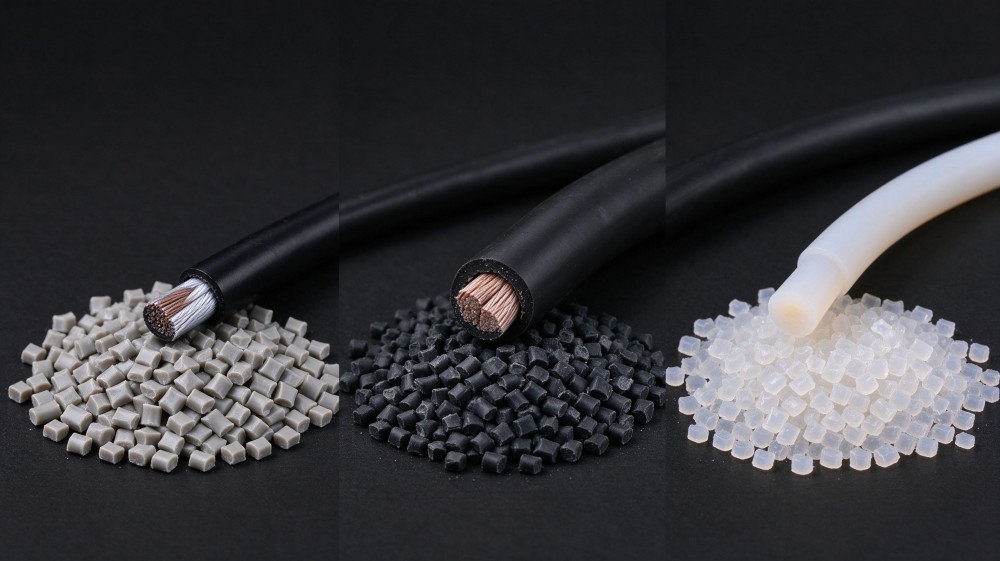
PVC, Rubber and Silicone: Pros & Cons of Common Cable Sheath Materials
These three are the most widely used insulation and sheath materials for cables. Here is a practical on-site comparison:
1. PVC (Polyvinyl Chloride)
The most common and low-cost material, used for ordinary electric wires.
Advantages
- - Low cost and easy processing
- - Good oil resistance, acid & alkali resistance and flame retardancy
- - Sufficient mechanical strength, stable for regular indoor wiring
Disadvantages
- - Limited temperature resistance: normally -15℃ ~ 70℃. It softens and ages easily under high temperature
- - Becomes hard and brittle at low temperatures
- - Releases pungent smoke when burning, average environmental performance
- - Not suitable for long-term high-temperature service or outdoor exposure under sunlight
**Application**: Household wires, general control cables, fixed indoor wiring
2. Rubber (Natural rubber / SBR, etc.)
Flexible and tear-resistant, the classic choice for portable cables.
Advantages
- - Excellent flexibility, good bending and dragging resistance
- - Remains tough without brittleness at low temperatures
- - Stable insulation performance, ideal for mobile equipment
Disadvantages
- - Poor wear resistance and oil resistance, prone to aging and cracking
- - Moderate temperature range: approx. -20℃ ~ 60℃
- - Vulnerable to sunlight, easy to powder outdoors
- - Ordinary flame retardant property
**Application**: Rubber-sheathed flexible cables, welding cables, temporary extension cords, wiring for mobile equipment
3. Silicone Rubber
High temperature and aging resistant, adopted for high-end special cables.
Advantages
- - Outstanding temperature tolerance: -60℃ ~ 200℃ or higher
- - Super flexible, stays soft even in cold environments
- - Excellent aging resistance, UV resistance and weather resistance
- - Non-toxic, flame retardant, stable electrical performance
Disadvantages
- - High price
- - Low mechanical strength, poor wear resistance and easy to cut
- - Not resistant to oil and organic solvents
**Application**: High-temperature equipment wiring, motor lead wires, wiring for ovens and boilers, weather-resistant outdoor cables, precision instrument cables
Quick Selection Guide
- - Fixed indoor regular wiring → PVC
- - Frequent dragging & bending, mobile use → Rubber
- - High/low temperature environments, long-term outdoor sun exposure → Silicone
Disclaimer
This article is sourced from other media and does not represent the views or positions of this website.