
What are the functions of cable insulation layer, sheath layer and shielding layer?
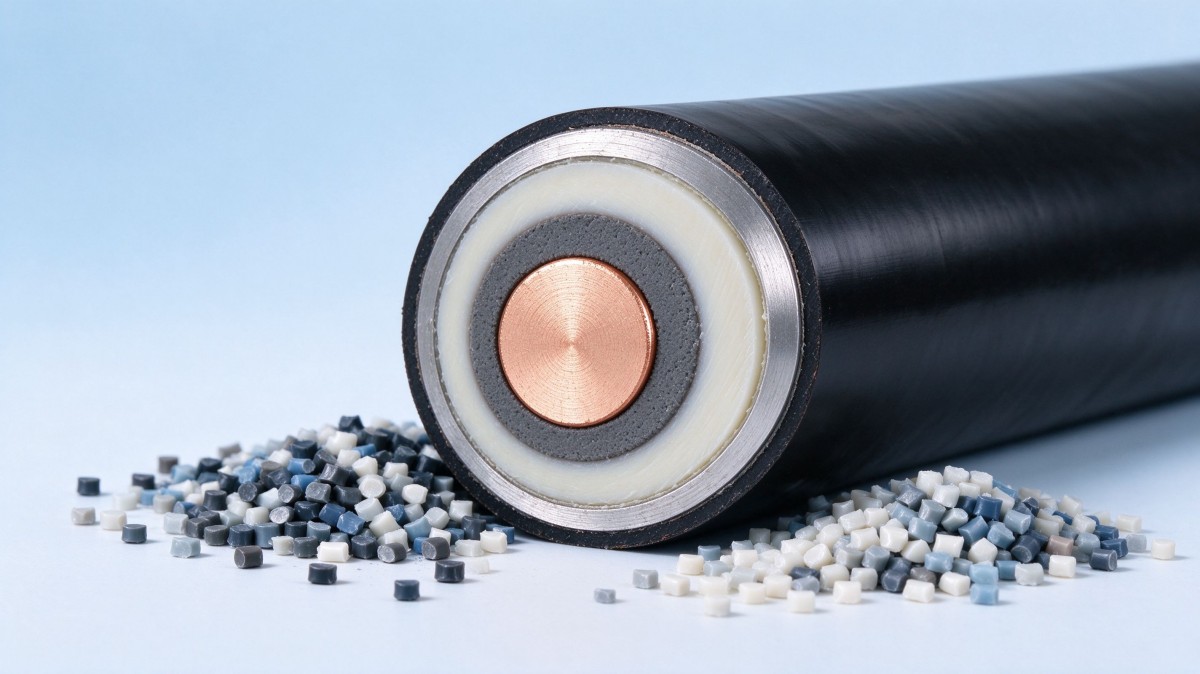
We know that cables vary in performance and structure. Generally, a cable consists of conductor, shielding layer, insulation layer, protective sheath and armor layer. The structure differs according to performance requirements. However, many people confuse the insulation layer, shielding layer and sheath layer of wires and cables. Let’s break them down.
1. Insulation Layer
The insulation layer separates the conductor from the surrounding environment or adjacent conductors. It ensures that electric current, electromagnetic waves or optical signals transmitted by the conductor core only travel along the wire, without leakage outward. It also protects personnel and external objects from electric hazards.
Cable insulation materials are mainly divided into plastic insulation and rubber insulation. Plastic insulated power cables have extruded plastic as insulation. Common plastics include PVC, PE, XLPE and low-smoke zero-halogen (LSZH). XLPE is widely used for medium and high-voltage cables thanks to its excellent electrical and mechanical properties. Rubber insulated power cables are made of rubber and compound additives. Common rubber insulation materials include EPR, butyl rubber and natural rubber blends. They feature softness and elasticity, suitable for frequent bending applications with small bending radius.
2. Protective Sheath Layer
The cable sheath is a protective covering outside the insulation layer, enabling the cable to adapt to various working environments. It protects the inner layer from mechanical damage and chemical corrosion, and improves mechanical tensile and compression resistance. The sheath shields the cable from mechanical impact, water, sunlight, organisms and fire, maintaining stable electrical performance over long service life. The quality of the sheath directly determines the service life of the cable. It is mainly classified into metal sheath, polymer sheath and composite sheath. Polymer and composite sheaths provide water resistance, flame retardancy, fire resistance and anti-corrosion performance.
3. Shielding Layer
The cable shielding layer includes inner shielding and outer shielding. It ensures good contact between conductor and insulation, as well as between insulation and inner sheath, eliminating local electric field concentration caused by uneven surfaces. Medium and high-voltage power cables are normally equipped with conductor shielding and insulation shielding, while some low-voltage cables have no shielding structure. Shielding types include semi-conductive shielding and metal shielding.
Shielded cables adopt twisted pair, individual shielding and overall shielding structures. They feature low dielectric loss, strong signal transmission and excellent anti-interference performance for weak analog signals. They are widely used in automation systems, computer monitoring for power generation, metallurgy, petroleum, chemical and textile industries.
Shielding materials: Metallized paper or semi-conductive tape is used for inner shielding. Copper tape or tinned copper braid is often applied for outer shielding. Braid materials are generally copper or tinned copper.
Above is the difference and function of cable insulation, shielding and sheath layers. Cables are closely related to property and personal safety. Avoid poor-quality cables. Purchase from formal and reliable cable manufacturers.
Disclaimer
This article is sourced from other media and does not represent the views or positions of this website.